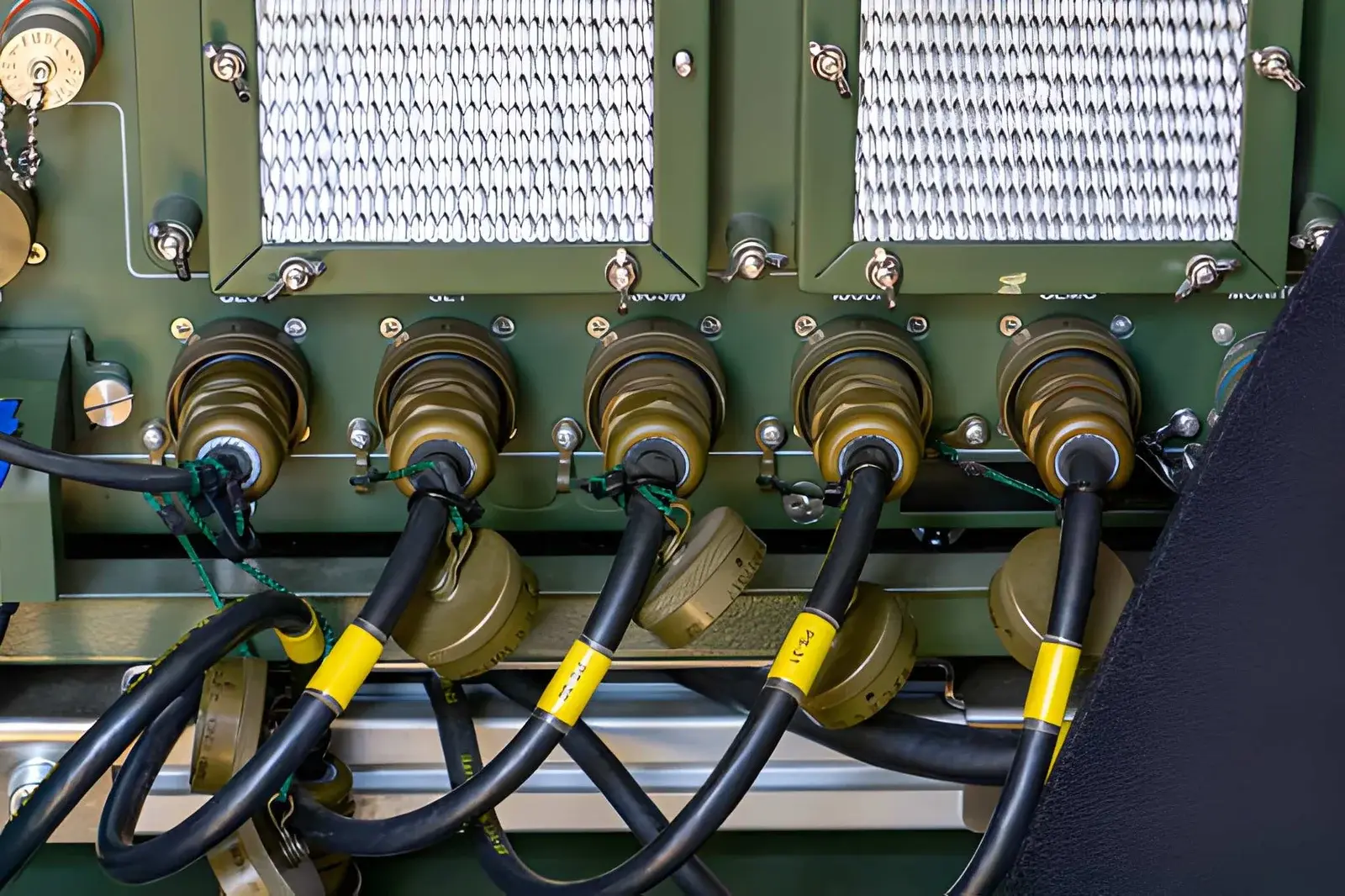

In today’s rapidly evolving tactical landscape, military superiority depends as much on electron flow and signal integrity as it does on kinetic firepower. From heavily armored ground vehicles and stealth fighter aircraft to unmanned surveillance platforms and advanced naval vessels, electrical architectures form the invisible foundation of modern defense capability. Modern military operations require electrical infrastructure capable of delivering continuous power, processing vast streams of sensor data, and operating without failure under severe environmental stress.
The Core Infrastructure: Rugged Cabling and Connectors
At the heart of every defense platform lies a complex nervous system of power distribution networks, signal channels, and high-speed data conduits. Unlike commercial off-the-shelf electronics, defense electrical components must endure relentless mechanical shock, intense vibration, chemical exposures, and dramatic thermal fluctuations.
Military-grade cable assemblies and specialized interconnects are meticulously engineered to maintain seamless conductivity in these hostile operating conditions. Ground combat vehicles and aerospace systems rely on heavy-duty power lines paired with high-density data wiring wrapped in advanced protective sleeving.
To prevent dielectric breakdown and insulation degradation in demanding electromagnetic applications, magnet wires and high-temperature electrical coils are often insulated with polyimide enamel, which preserves electrical isolation and mechanical strength under elevated operating temperatures. Additionally, heavy-duty military connectors ensure that critical data links between radar units, cockpit displays, and targeting systems remain securely attached despite intense battlefield movement.
Advanced Surveillance and Sensor Electronics
Modern defense strategy relies heavily on situational awareness, where surveillance systems transform raw electromagnetic energy into actionable battlefield intelligence. Complex radar installations, electro-optical cameras, and infrared sensors must process immense volumes of data in real time to detect, track, and engage potential threats across air, land, and maritime environments.
These sophisticated surveillance platforms require ultra-stable electrical power conditioning to eliminate signal noise and electromagnetic interference. High-performance signal-processing hardware filters out background clutter, enabling automated target tracking and seamless communication between field units and command centers. Whether mounted on stationary installation perimeters, naval destroyers, or unmanned aerial vehicles (UAVs), high-reliability electronic assemblies ensure that the sensor chain functions continuously during critical missions.
Environmental Resilience and Thermal Management
Operating across extreme environments—from sub-zero high-altitude flight to scorching desert battlefields—requires robust thermal management and physical protection. Defense electrical enclosures employ ruggedized chassis designs, specialized heat-dissipating interfaces, and hermetic seals to protect sensitive microelectronics from dust, moisture, and atmospheric contaminants.
Furthermore, the proliferation of high-power radar networks, directed-energy assets, and electronic warfare tactics makes electromagnetic compatibility (EMC) essential. Specialized shielding alloys, careful grounding designs, and power-line filtering circuits safeguard internal systems from external electromagnetic pulse (EMP) threats and intentional signal jamming, keeping communication arrays and operational controls active.
Power Architecture and Emerging Trends
As military forces integrate artificial intelligence, autonomous ground vehicles, and high-energy defensive systems, power requirements across the tactical edge continue to escalate. Traditional power setups are giving way to intelligent microgrids, solid-state power distribution units, and high-efficiency hybrid-electric powertrains.
Unmanned aerial systems and robotic platforms demand ultra-compact, high-density energy storage paired with smart power conversion units to maximize operational range and payload endurance. Concurrently, modular open systems architecture (MOSA) guidelines are transforming defense electronics design, allowing engineers to rapidly upgrade processing units, power controllers, and sensor hardware without requiring a total rewiring of the host vehicle or aircraft.
Conclusion
Defense electrical systems are far more than supporting hardware; they are the enabling backbone of modern military readiness. By combining advanced material engineering, ruggedized interconnects, environmental resilience, and intelligent power distribution, these critical technologies ensure that modern military platforms remain agile, fully connected, and operationally dominant in any environment.
Also Read
- 140+ Best Replies When Someone Falls Asleep Texting You 😴📱 (2026)
- KML Meaning in Text: Full Guide, Uses, and Real-Life Chat Examples
- What Does SWM Mean in Text? Meaning, Uses, Examples & More(2026)