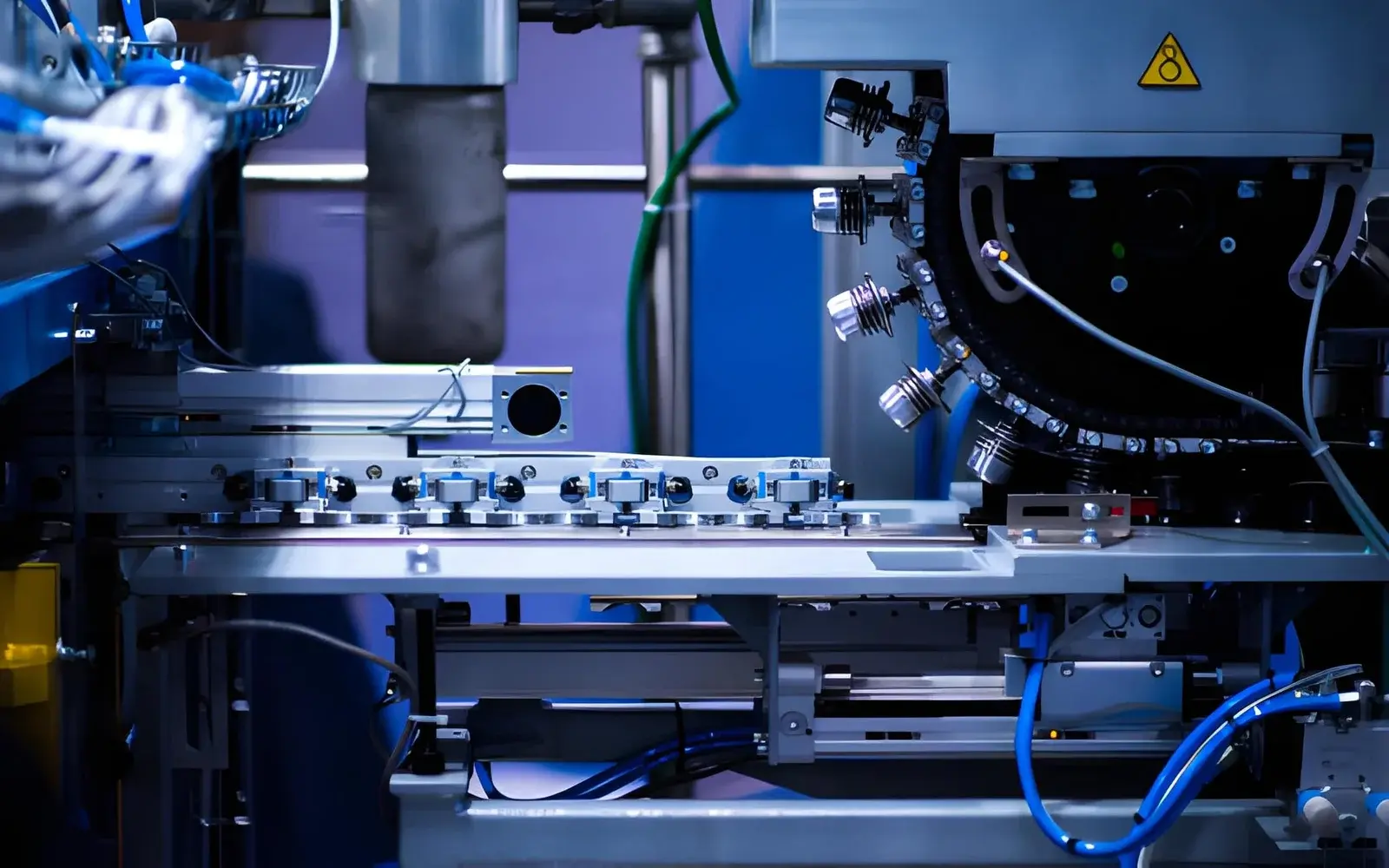

Precision manufacturing relies on achieving sub-micron tolerances, consistent material integrity, and flawless surface finishes across intricate components. While high-performance computer numerical control machinery, specialized tooling, and advanced software remain vital, factory environmental conditions exert a profound influence on manufacturing accuracy. Fluctuations in ambient temperature, relative humidity, air purity, and structural vibration introduce invisible variables that cause dimensional drift, material distortion, and process instability. Controlling plant atmospheric conditions ensures repeatable precision, minimizes costly scrap rates, and safeguards component quality across demanding industrial sectors.
Ambient Temperature Fluctuations and Material Thermal Expansion
Thermal expansion represents one of the most persistent environmental challenges in high-precision machining and micro-scale fabrication environments. All physical metals, alloys, polymers, and ceramics expand or contract in response to ambient temperature changes, altering physical dimensions during cutting, grinding, or measuring operations.
Even minor temperature shifts of two to three degrees Celsius can cause a steel workpiece or machine tool spindle to expand by several micrometers. If an operator machines a component in a warm afternoon facility and measures it later in a cooler inspection laboratory, dimensional discrepancies will cause out-of-tolerance part rejections.
To counteract thermal expansion errors, advanced manufacturing facilities maintain climate-controlled cleanrooms stabilized to standard reference temperatures, typically twenty degrees Celsius. Enclosing high-precision machine tools within thermally isolated enclosures prevents environmental temperature swings from distorting tool geometry, stabilizing cutting precision across continuous production runs.
Calculating Coefficients of Thermal Expansion in Metals
Understanding specific material expansion rates enables engineers to predict dimensional movement and adjust machine offsets accurately.
Accounting for thermal growth during high-speed spindle operations prevents deep cutting errors. Precise thermal calculations protect machining tolerances.
Establishing Climate-Controlled Cleanroom Environments
Stabilizing room temperatures within tight fractions of a degree eliminates thermal drift across sensitive metrology and machining spaces.
Constant ambient temperatures ensure parts measure identically during fabrication and final quality assurance checks. Climate control guarantees measurement repeatability.
Relative Humidity Drift, Static Charge, and Moisture Control
Relative humidity levels within production facilities exert a massive, double-sided impact on material behavior, electronic assembly integrity, and optical manufacturing processes. Humidity levels that drift too high or drop too low introduce distinct manufacturing hazards that ruin product quality.
Low relative humidity environments encourage static electricity accumulation on non-conductive materials, sensitive silicon wafers, and delicate micro-electronics. Electrostatic discharges destroy sensitive semiconductor circuits instantly, while static attraction draws airborne dust particles directly onto pristine optical lenses and painted surfaces.
Conversely, excessively high humidity causes condensation on cold metal surfaces, triggering rapid oxidation, flash rusting, and chemical corrosion on raw metal stock and finished components. Furthermore, hygroscopic materials—such as industrial polymers, composite resins, and 3D printing filaments—absorb atmospheric moisture, causing dimensional swelling and structural bubbling during high-temperature molding or extrusion.
Integrating energy-efficient moisture management infrastructure—such as an advanced industrial ultrasonic humidification system—delivers precise relative humidity control between forty and fifty percent. Ultrasonic humidification atomizes microscopic water droplets rapidly without heat, neutralizing static charges instantly without causing moisture condensation on sensitive machinery.
Neutralizing Electrostatic Discharge Risks with Humidity
Maintaining optimal humidity levels allows air to act as a natural conductor, dissipating static charges before destructive sparks form.
Preventing static buildup protects sensitive microchips and prevents dust contamination on coated surfaces. Humidity control stops static damage.
Preventing Atmospheric Corrosion on Raw Metal Stock
Regulating indoor moisture levels stops invisible humidity film from settling onto raw steel coils and machined component faces.
Corrosion-free metal surfaces eliminate secondary cleaning steps and preserve pristine surface finishes. Moisture control protects raw metal inventory.
Airborne Particulate Contamination and Cleanroom Air Filtration
In micro-electronics, semiconductor fabrication, medical device assembly, and precision optics manufacturing, microscopic airborne dust particles represent severe physical contaminants. A single dust particle measuring just a few microns across can ruin an integrated circuit pattern or scratch an optical coating.
Unfiltered factory air contains thousands of floating microscopic contaminants, including mineral dust, textile fibers, skin cells, and oil vapors. When these particulates settle onto micro-machined parts or optical lenses during assembly, they cause structural voids, surface blemishes, and mechanical binding in tight-tolerance assemblies.
High-precision manufacturing facilities utilize multi-stage high-efficiency particulate air filtration systems paired with positive-pressure cleanroom architectures. Laminar air flow hoods sweep clean, filtered air across assembly benches continuously, pushing airborne dust away from critical assembly zones to guarantee pristine component cleanliness.
Implementing Laminar Air Flow Systems in Assembly Zones
Directing smooth, unidirectional streams of filtered air across workbenches prevents airborne dust from settling on exposed components.
Laminar air currents carry microscopic contaminants away continuously, maintaining sterile assembly spaces. Airflow control safeguards cleanroom purity.
Utilizing Positive Pressure to Block External Contamination
Maintaining higher air pressure inside cleanrooms relative to surrounding hallways prevents dirty outside air from rushing in when doors open.
Positive pressure barriers protect sensitive fabrication lines from ambient factory dust ingress. Pressure differential control preserves air cleanliness.
Structural Vibration Isolation and Floor Dynamics
High-precision manufacturing and nanometer-scale metrology operations are extraordinarily sensitive to external mechanical vibrations. Earthquakes, nearby highway traffic, heavy rail lines, overhead cranes, and adjacent stamping presses send low-frequency vibrational waves traveling through factory concrete floors.
Vibrations transmitted through machine bases cause microscopic chatter marks along machined surfaces, ruin surface finishes, and destabilize coordinate measuring machine probes during inspection passes. Uncontrolled floor dynamics make achieving mirror-smooth surface finishes or nanometer measurements impossible.
To isolate delicate equipment from ambient floor vibration, manufacturers install heavy concrete inertia pads decoupled from the main building foundation using specialized isolation joints. Additionally, high-precision CMMs, electron microscopes, and ultra-precision lathes utilize active pneumatic air-isolation tables that damp incoming mechanical vibrations dynamically.
Decoupling Machine Foundations with Inertia Blocks
Pouring isolated concrete inertia masses supported by elastomeric pads absorbs ground-borne vibrations before they reach machine beds.
Decoupled foundations shield high-speed grinding and milling equipment from external plant impacts. Isolated foundations guarantee structural stability.
Deploying Active Pneumatic Vibration Isolation Tables
Pneumatic air mounts levitate sensitive measuring instruments, utilizing automated feedback valves to cancel out low-frequency floor oscillations instantly.
Active vibration damping enables nanometer-scale surface scanning without physical interference from factory floor movement. Active damping ensures measuring accuracy.
Barometric Pressure Shifts and Air Density Effects
Barometric pressure fluctuations caused by changing regional weather systems or facility HVAC pressure cycles can introduce subtle complications in ultra-precision manufacturing and gas-based laser processes. Shifts in atmospheric pressure alter air density, index of refraction, and gas flow dynamics.
In high-precision optical laser cutting, coordinate measuring interferometry, and semiconductor photolithography, changes in air density alter how light refracts through air spaces. A sudden drop in barometric pressure alters the wavelength calibration of laser measurement systems, leading to minute distance measurement errors over long paths.
Facilities executing laser interferometry calibrate their systems using real-time environmental compensation units that track barometric pressure, air temperature, and humidity continuously. Automated software algorithms calculate density shifts instantly, adjusting laser wavelength measurements to preserve absolute positional accuracy regardless of weather shifts.
Calibrating Laser Interferometers for Air Density Changes
Monitoring barometric pressure continuously allows laser tracking systems to adjust refractive index values, keeping distance measurements accurate.
Real-time environmental compensation prevents atmospheric pressure drops from skewing long-distance laser metrology. Wavelength calibration preserves laser precision.
Regulating Gas Flow Dynamics in Thermal Processing
Changes in ambient air density affect gas mass flow rates in specialized vacuum furnaces and chemical vapor deposition chambers.
Maintaining precise pressure feedback loops ensures consistent gas chemical reactions during thin-film coating processes. Pressure regulation guarantees coating uniformity.
Factory Lighting and Thermal Radiation Management
Lighting infrastructure within manufacturing facilities is often overlooked as an environmental factor, yet lighting choices influence both visual inspection quality and localized thermal stability. Traditional high-intensity discharge lamps and incandescent bulbs radiate substantial infrared heat directly onto work surfaces beneath them.
Infrared radiant heat from overhead light fixtures warms machine beds and workpieces unevenly, causing localized thermal expansion on top surfaces while bottom surfaces remain cool. This uneven thermal gradient causes metal plates to warp slightly, ruining flatness tolerances during surface grinding operations.
Modern precision manufacturing plants replace heat-emitting legacy lighting with cool, high-efficiency LED lighting arrays equipped with high color-rendering index ratings. LED fixtures emit zero infrared thermal radiation toward workpieces, eliminating localized radiant heating while providing bright, uniform illumination for visual quality checks.
Eliminating Infrared Radiant Heat with LED Lighting
Cool-operating LED arrays prevent localized heat build-up on machine tables, maintaining uniform temperatures across large metal workpieces.
Eliminating light-induced thermal gradients prevents structural plate warping during fine surface polishing. LED lighting protects surface flatness.
Optimizing Color Rendering for Visual Surface Inspection
Installing high-CRI lighting across quality control stations allows inspectors to spot subtle metal discoloration, surface cracks, and finish flaws easily.
Consistent, glare-free illumination reduces visual eye strain for quality control technicians during detailed manual inspections. Quality lighting enhances defect detection.
Conclusion
Controlling environmental conditions across precision manufacturing facilities is an absolute requirement for achieving consistent sub-micron tolerances, superior surface finishes, and high product yields. Ambient temperature fluctuations, relative humidity shifts, airborne particulate contamination, structural floor vibrations, barometric pressure changes, and lighting radiation introduce invisible variables that degrade manufacturing accuracy. By implementing stabilized climate zones, precision ultrasonic humidification systems, high-efficiency air filtration, active vibration isolation, and cool LED lighting, manufacturers establish a completely stable production environment. Controlling plant atmospheric variables eliminates dimensional drift, protects raw materials, reduces costly scrap rates, and ensures unyielding component quality for the world’s most demanding advanced industries.
Also Read
- 140+ Best Replies When Someone Falls Asleep Texting You 😴📱 (2026)
- KML Meaning in Text: Full Guide, Uses, and Real-Life Chat Examples
- What Does SWM Mean in Text? Meaning, Uses, Examples & More(2026)