
Introduction
Lifting heavy vehicles or equipment can be a significant challenge. Traditional hydraulic jacks often demand considerable manual effort. This can lead to slower jobs and increased physical strain.
Air hydraulic floor jacks offer a powerful, efficient solution. They combine the reliable strength of hydraulics with the speed and ease of compressed air. This design allows for rapid, effortless lifting.
These advanced jacks are indispensable in professional garages and workshops. They are also vital for serious home mechanics. They drastically reduce physical exertion and speed up maintenance tasks.
Choosing the right air hydraulic floor jack is crucial. It impacts both safety and operational efficiency. With many options available, making an informed decision is key.
In this comprehensive guide, we will walk you through everything you need to know. We’ll explore how these jacks operate and what makes them different. We’ll also cover essential features to look for and critical safety practices. For those seeking robust and reliable lifting equipment, understanding your options is vital. You can also explore various AutoTech expert lifting solutions to find the perfect fit for your needs.
How Air Hydraulic Floor Jacks Operate
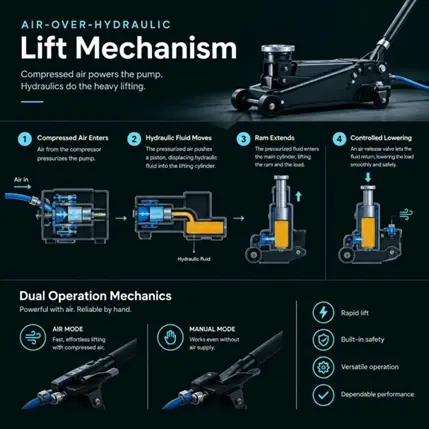
At its core, an air hydraulic floor jack leverages the principles of both pneumatic and hydraulic systems to achieve powerful, controlled lifting. Unlike a traditional hydraulic jack, which relies solely on manual pumping to build pressure in the hydraulic cylinder, an air hydraulic jack incorporates a pneumatic pump. This pump uses compressed air from an external source, such as an air compressor, to rapidly pressurize the hydraulic fluid.
The process begins when compressed air enters a chamber, pushing a piston that, in turn, displaces hydraulic fluid. This fluid is then directed into the main lifting cylinder, causing the ram to extend and lift the load. Many models feature dual-stage pistons, which allow for a quicker initial lift to reach the load, followed by a more powerful, slower lift for the heavier stages. This combination results in a rapid ascent, significantly reducing the physical fatigue associated with manual pumping and speeding up the overall lift cycle. The precision of hydraulic fluid allows for smooth, controlled lowering, often managed by a simple air-release valve.
Dual Operation Mechanics
One of the significant advantages of many air hydraulic jacks is their dual-operation capability. While designed for air-powered efficiency, most models also retain a manual pumping function. This means that if an air compressor is unavailable, or if the air supply is interrupted, the jack can still be operated manually, albeit with more effort. This dual-mode design provides a crucial backup, ensuring that tasks can proceed even in less-than-ideal conditions.
The transition between air and manual operation is typically seamless. An air switch, often integrated into the handle, controls the pneumatic assist. When activated, it directs compressed air to the pump. When deactivated, or if air pressure is insufficient, the manual pump can be engaged. Safety features like internal bypass valves prevent overloading, ensuring the jack operates within its specified limits regardless of the power source. This versatility makes air hydraulic jacks a reliable tool for a wide range of applications, from busy professional garages to remote roadside assistance.
Comparing AutoTech Expert Lifting Solutions Against Traditional Bottle Jacks
When evaluating lifting equipment, understanding the distinctions between air hydraulic floor jacks and traditional bottle jacks is crucial. While both utilize hydraulic principles, their design and application differ significantly. Traditional bottle jacks are compact and powerful for their size, capable of lifting substantial weight. However, they typically have a small base and a limited reach, making them less stable on uneven surfaces and often requiring a higher minimum clearance to position under a vehicle. Their operation is entirely manual, demanding considerable physical effort to pump the handle, especially for heavy loads.
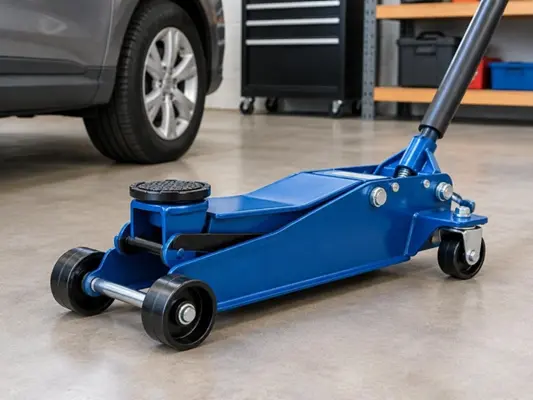
Air hydraulic floor jacks, often referred to as “AutoTech expert lifting solutions” due to their advanced design, offer several advantages. They feature a rolling chassis, providing superior maneuverability and stability. Their low-profile design allows them to slide under vehicles with minimal ground clearance, such as those found in modern commercial fleets or sports cars. The longer wheelbase and broader base contribute to enhanced stability during lifting. Furthermore, the extended reach and positioning handle of floor jacks allow operators to stand at a safer distance while controlling the lift. The air-powered mechanism eliminates manual pumping, drastically increasing lift speed and reducing operator fatigue. For example, some VEVOR 5-ton models can lift up to 18.5 inches in just 3-5 seconds, a speed unattainable with manual bottle jacks. While a 20-ton BIG RED air hydraulic bottle jack can be quite powerful, the floor jack configuration often provides greater versatility and ease of use in a workshop setting.
Key Criteria for Choosing AutoTech Expert Lifting Solutions
Selecting the appropriate air hydraulic floor jack requires careful consideration of several key criteria to ensure it meets your specific lifting needs and safety standards. These criteria range from the jack’s raw lifting power to its physical dimensions and the air supply it demands. Understanding these specifications will help you make an informed decision, ensuring both efficiency and safety in your operations.
Capacity Requirements and Height Dimensions
The most critical specification for any jack is its lifting capacity, typically expressed in tonnage. Air hydraulic floor jacks are available in a wide range of capacities, from lighter-duty 5-ton models suitable for many passenger vehicles and light trucks, up to massive 80-ton units designed for the heaviest commercial and industrial equipment. For instance, Mile-X offers jacks from 5 tons (around $1,564 in late 2026) up to 80 tons (around $3,780). Common capacities like 10-ton, 20-ton, and 35-ton are widely available from brands like VEVOR, AFF, and Stark USA. Always choose a jack with a capacity that comfortably exceeds the maximum weight you anticipate lifting.
Equally important are the height dimensions: minimum clearance and maximum lift. The minimum clearance dictates how low the jack can sit, allowing it to slide under vehicles with low ground clearance. Some professional-grade 22-ton jacks are designed to fit under vehicles with as little as 8 15/32 inches of clearance. The maximum lift height, on the other hand, determines how high the jack can raise a load. This is crucial for accessing undercarriages, changing tires on large vehicles, or performing maintenance. Many jacks come with screw saddles or extension adapters (e.g., 7/8”, 2”, and 4” extensions) to provide additional height, reaching up to 20.5 inches or more. Multi-stage pistons can also contribute to a greater overall stroke length, providing flexibility for various vehicle heights.
Air Supply and Pressure Specifications
The pneumatic operation of an air hydraulic jack necessitates a compatible air supply. The working pressure is a crucial factor, with most models requiring between 110-120 PSI (pounds per square inch) for optimal performance. It’s vital to ensure your air compressor can consistently deliver this pressure. Beyond pressure, the CFM (cubic feet per minute) airflow rating of your compressor is also important, as it determines how quickly the jack can operate and maintain pressure during repeated lifts. A compressor with insufficient CFM might lead to slower operation or the jack struggling to reach its full potential.
Connection compatibility is another consideration. Most air hydraulic jacks use standard NPT (National Pipe Taper) fittings, commonly 1/4 inch-18 NPT, for connecting to an air line. Ensure your air hose and quick couplings match these specifications. Using an appropriate air line diameter is also important to prevent pressure drops and ensure efficient airflow to the jack. Always check the manufacturer’s recommendations for air pressure and CFM requirements to guarantee proper and safe operation.
Application Suitability and Chassis Configurations
The diverse range of air hydraulic floor jacks means there’s a specific configuration suited for nearly every lifting task. From compact units for personal garages to heavy-duty models for industrial applications, understanding the design and intended use of each type is crucial for optimal selection.
Selecting AutoTech Expert Lifting Solutions for Commercial Fleets
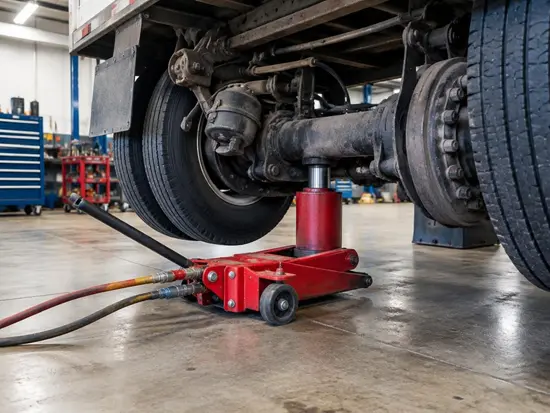
For commercial fleets, heavy equipment, and industrial settings, the demands on lifting equipment are rigorous. AutoTech expert lifting solutions in this category are engineered for durability, high capacity, and efficiency. Low-profile clearance models are indispensable for servicing modern trucks, buses, and other commercial vehicles that often have minimal ground clearance. These jacks are designed to slide easily under chassis and axles.
Brands like Norco, Omega, and AFF offer heavy-duty jacks, including those with capacities up to 80/50 Ton two-stage models, specifically built for light commercial vehicles, agricultural equipment, and even bus maintenance. The robust construction, often featuring cast iron bases and forged steel components, ensures longevity under constant heavy use. Maneuverability is also key; large, durable caster wheels allow these substantial jacks to be easily positioned under heavy loads, even in cramped shop environments. For roadside service, portable yet powerful air hydraulic jacks provide the necessary lifting power without the physical strain of manual alternatives.
Equipment Style Comparison
When considering air hydraulic jacks, it’s important to differentiate between the various styles available, each designed for specific applications and offering distinct advantages.
Feature Low-Profile Floor Jacks Axle Bottle Jacks Triple Air Bag Jacks Lifting Capacity 5-80 tons 5-50 tons 2-3 tons Min. Clearance Very low (e.g., 8.5 inches) Higher (e.g., 10 inches) Extremely low (e.g., 5 inches) Max. Lift Height Moderate to High (up to 20+ inches with extensions) Moderate to High (up to 20+ inches) Low to Moderate (up to 18 inches) Speed Very fast (3-5 seconds) Fast (air-powered) Extremely fast Mobility High (rolling chassis) Moderate (compact, portable) High (lightweight) Stability Excellent (wide base) Good (small footprint) Good (wide contact area) Best Use Case Commercial garages, heavy vehicles, low-clearance cars Roadside assistance, heavy equipment, limited space Off-road recovery, uneven surfaces, quick lifts Low-profile floor jacks, as discussed, are ideal for professional workshops due to their maneuverability and ability to get under a wide range of vehicles, from passenger cars to heavy trucks. Axle bottle jacks, often air hydraulic, offer a compact footprint with significant lifting power, making them popular for heavy-duty applications where space is a premium, such as lifting heavy equipment or for roadside tire changes on large vehicles. They can also be versatile, with some users even modifying motorcycle lifts with 12-ton air/hydraulic bottle jacks for air-powered operation. Triple air bag jacks, or pneumatic air bag jacks, are distinct in their mechanism. Instead of hydraulic fluid, they use compressed air to inflate durable rubber bags, providing an incredibly fast lift with very low minimum clearance. They are particularly well-suited for off-road recovery, lifting on uneven surfaces, or for quick lifts where a wide contact area is beneficial, though their maximum lift height and capacity are generally lower than their hydraulic counterparts.
Essential Safety Standards, Accessories, and Operation
Safety is paramount when operating any heavy lifting equipment, and air hydraulic floor jacks are no exception. Adhering to established safety standards, utilizing appropriate accessories, and following correct operational procedures are non-negotiable for preventing accidents and ensuring the longevity of both the equipment and the vehicle being serviced.
Critical Safety Hardware and Accessories
No matter the capacity or sophistication of your air hydraulic floor jack, it should never be the sole support for a vehicle or heavy load while work is being performed underneath. This is where critical safety hardware comes into play.
- Heavy-Duty Jack Stands: Always use certified jack stands to support the load once it has been lifted to the desired height. These stands are designed to bear the weight for extended periods, providing a stable and secure platform. Look for stands that meet or exceed ASME-PASE (Portable Automotive Service Equipment) standards, which ensure safety and performance.
- Saddle Extensions: Many jacks come with or can be fitted with various saddle adapters and extensions. These are crucial for safely engaging different lifting points on a vehicle’s frame or axle, ensuring a secure grip and preventing slippage.
- Wheel Chocks: To prevent accidental movement, always place wheel chocks on the wheels that remain on the ground, especially when lifting only one end or side of a vehicle.
- Air Line Filters/Regulators: Given that air hydraulic jacks rely on compressed air, an air line filter is essential to prevent moisture and contaminants from entering the jack’s pneumatic system, which can cause corrosion and malfunction. A pressure regulator allows you to control the exact PSI delivered to the jack, protecting it from over-pressurization.
- Personal Protective Equipment (PPE): Always wear appropriate PPE, including safety glasses and gloves, when operating lifting equipment.
Safe Positioning and Maintenance Procedures
Proper positioning of the jack is fundamental to safe lifting. Always place the jack on a firm, level surface. Consult your vehicle’s owner’s manual to identify designated lifting points on the frame or axle. Ensure the jack’s saddle is securely centered on the lifting point before initiating the lift. For low-profile jacks, ensure there’s sufficient clearance, as some models can fit under vehicles with as little as 8 15/32 inches.
During operation, maintain a safe distance from the vehicle and the jack. Many professional jacks feature long handles that allow operators to stand clear. Never exceed the jack’s rated capacity, and be mindful of the load’s stability throughout the lifting and lowering process. Use the jack’s descent control mechanism to lower the load slowly and deliberately.
Regular maintenance is vital for the longevity and safe operation of your air hydraulic jack. This includes:
- Hydraulic Bleeding: Periodically bleed air from the hydraulic system to ensure proper fluid flow and prevent spongy operation.
- Moisture Filtration: Regularly check and drain any moisture from your air compressor and inline filters to prevent water contamination in the jack’s pneumatic components.
- Lubrication Schedules: Follow the manufacturer’s recommendations for lubricating moving parts and pivot points.
- Fluid Checks: Monitor hydraulic fluid levels and top up or replace as needed, using the specified type of hydraulic oil.
- Inspection: Before each use, inspect the jack for any signs of damage, leaks, or wear on hoses and connections.
By adhering to these safety guidelines and maintenance practices, you can ensure that your air hydraulic floor jack remains a reliable and safe tool in your workshop for years to come.
Frequently Asked Questions About Air Hydraulic Jacks
We often encounter common questions from individuals considering the purchase or use of air hydraulic floor jacks. Here, we address some of the most frequent inquiries to provide clarity and assist in making informed decisions.
What air pressure is required to operate an air hydraulic floor jack?
Most air hydraulic floor jacks are designed to operate efficiently within a specific air pressure range, typically requiring between 110-120 PSI (pounds per square inch). It is crucial to check the manufacturer’s specifications for the exact requirements of your particular model. Your air compressor must be capable of consistently supplying this pressure. Beyond just pressure, the compressor’s CFM (cubic feet per minute) output is also important, as it determines the volume of air available, which impacts the jack’s speed and ability to perform continuous lifts. An inadequate CFM can lead to slower operation or the jack struggling under heavy loads. Using a pressure regulator on your air line is a best practice to ensure the jack receives the correct and stable air pressure, preventing potential damage from over-pressurization.
Can air hydraulic jacks be operated without an air compressor?
Yes, many air hydraulic jacks feature a dual-mode design that allows for both air-powered and manual operation. This means that if an air compressor is not available, or if there’s a power outage, you can still operate the jack using its integrated manual hand-pump. This dual functionality provides a valuable backup, ensuring that you’re not left stranded if your air supply is compromised. While manual operation will require more physical effort and be slower than air-powered lifting, it offers essential backup functionality. Always verify this feature in the product specifications if manual backup is a critical requirement for your intended use.
How do multi-stage air hydraulic jacks handle varying vehicle heights?
Multi-stage air hydraulic jacks, particularly those with telescoping pistons, are expertly designed to accommodate a wide range of vehicle heights and lifting requirements. These jacks feature multiple hydraulic cylinders that extend in sequence, providing a greater overall stroke extension compared to single-stage jacks. The initial stage often provides a rapid lift to quickly reach the load, while subsequent stages engage to provide the power needed for heavier lifting to greater heights.
Additionally, many models come equipped with saddle adapters or extension pipes (e.g., 7/8”, 2”, and 4” extensions) that can be added to the lifting saddle to increase the effective lift height. Some also feature an adjustable screw saddle, allowing for fine-tuning of the initial contact point. This combination of telescoping pistons and adaptable accessories ensures that multi-stage jacks can effectively handle vehicles with both low clearance and those requiring significant elevation for maintenance, offering staged capacity throughout their lifting range.
Conclusion
Air hydraulic floor jacks represent a significant leap forward in heavy lifting technology, offering a powerful blend of hydraulic strength and pneumatic efficiency. As we’ve explored, these tools are designed to minimize physical strain, accelerate workflow, and enhance safety in both professional and home workshop environments. From their dual-operation mechanics to their diverse capacity options and chassis configurations, understanding the nuances of these jacks is key to selecting the right equipment for your specific needs.
When choosing your next air hydraulic floor jack, prioritize lifting reliability by considering capacity, lift height, and air supply requirements. Invest in models that adhere to essential safety standards like ASME-PASE and remember that critical accessories, especially certified jack stands, are non-negotiable for safe operation. Regular maintenance will ensure equipment longevity and protect your investment. By making an informed choice, you’re not just buying a jack; you’re investing in workplace ergonomics, operational efficiency, and the peace of mind that comes with knowing you have a robust and reliable tool at your disposal.
Also READ-10 Best Workforce Analytics Software to Improve Productivity and Manage Modern Teams