When you see 💀 in a message from a girl, it can feel confusing or even alarming at first. This emoji is widely used in modern texting, especially among Gen Z, and its meaning is not always literal.
People often search for its meaning because it appears in funny chats, TikTok comments, or casual conversations where something “too funny” or “too awkward” happens.
The 💀 emoji has become a part of internet slang culture. It doesn’t usually mean death in serious terms. Instead, it often expresses laughter, shock, or emotional overload. Understanding it correctly can help you avoid misreading tone in chats.
In this article, we’ll break down what it really means, how girls use it, and how you should respond depending on context.
Meaning & Definition of 💀 in Text From a Girl
The 💀 emoji originally represents a skull, symbolizing death. However, in texting culture, especially among younger users, it has evolved into a completely different meaning.
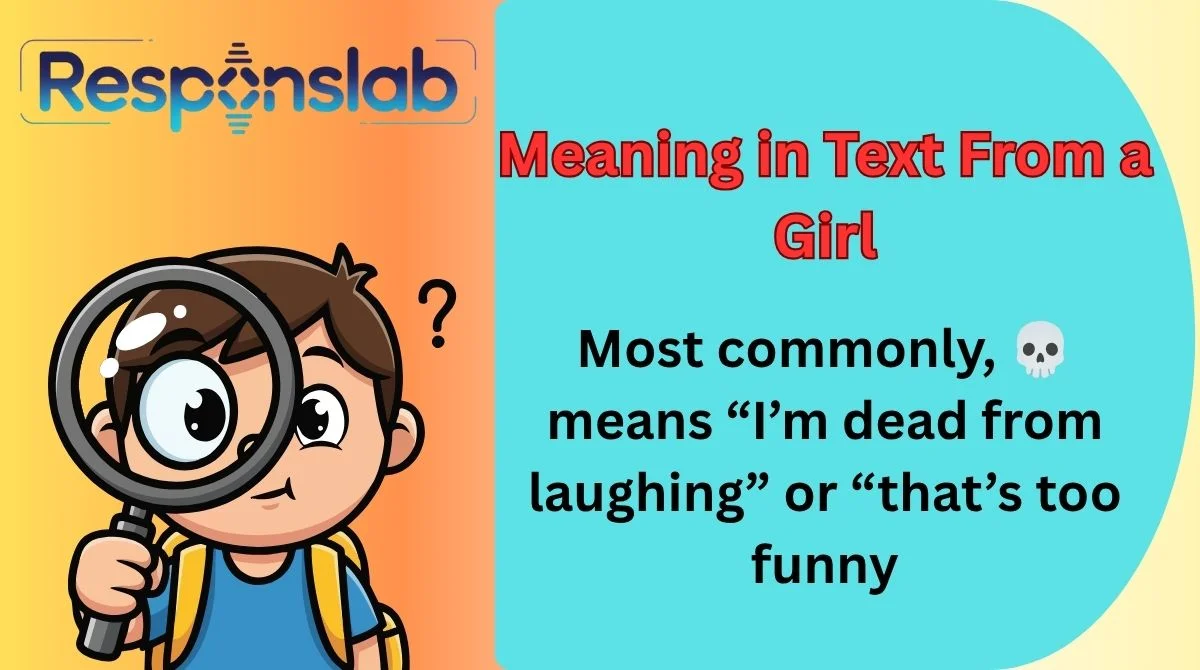
Most commonly, 💀 means “I’m dead from laughing” or “that’s too funny”. When a girl sends it in chat, she is often reacting to something hilarious or absurd. It’s a modern way of saying “LOL” or “I can’t breathe laughing.”
Secondary meanings include:
- Feeling awkward or embarrassed
- Being emotionally overwhelmed
- Reacting to something shocking or unbelievable
For example:
- “You really said that to your teacher? 💀”
- “I just saw his haircut 💀”
In romantic or casual texting, it can also show playful teasing. It rarely carries negative intent unless the conversation itself is negative.
Background & Origin of the 💀 Emoji Meaning
The skull emoji’s modern usage started in internet meme culture. Early social media users began replacing “I’m dead” (meaning laughing hard) with 💀 for humor.
Platforms like Twitter, Vine, and later TikTok played a big role in spreading this slang. Over time, Gen Z users adopted it as a faster, more expressive reaction than typing words.
By around 2019–2021, 💀 became mainstream in casual texting. Girls especially use it in playful conversations to exaggerate reactions.
This shift shows how emojis evolve beyond their original meanings into emotional shortcuts.
Usage in Different Contexts
In texting from a girl, 💀 can change meaning depending on tone:
Funny context:
- “That joke was illegal 💀”
Flirty context:
- “You’re so foolish💀😂”
Embarrassing context:
- “I just waved back at a stranger who wasn’t even waving at me 💀”
Sarcastic context:
- “Yeah sure, you’re a genius 💀”
It is heavily tone-based, so reading the conversation is important.
Meanings Across Platforms
WhatsApp:
Mostly used in private chats for jokes, teasing, and reactions.
Instagram:
Used in comments to react to funny reels or posts.
TikTok:
Extremely common in comments section for viral humor.
Snapchat:
Used in direct chats, often more personal and playful.
Across all platforms, the meaning stays similar: humor, shock, or exaggeration.
Other Fields Meanings of 💀
Outside texting, 💀 has literal meanings:
- Medical: Symbol of death or mortality
- Physics: Sometimes used in diagrams representing decay or hazard
- Aircraft/technical: Warning symbol for fatal risks or danger zones
- Gaming: Indicates player “death” or failure
However, in girl-to-girl or girl-to-boy texting, it is almost always informal and humorous.
Common Misconceptions & Mistakes
Many people misunderstand 💀 as something serious or negative.
Common mistakes:
- Thinking she is angry (usually not true)
- Assuming it means actual death
- Overreacting emotionally to it
- Misreading sarcasm as insult
In reality, tone matters more than the emoji itself.
Similar Terms & Alternatives
| Emoji/Text | Meaning |
|---|---|
| 😂 | Laughing hard |
| 🤣 | Rolling on the floor laughing |
| “I’m dead” | Funny overload |
| 😭 | Laughing + emotional reaction |
| 💀 | Extreme laughter or shock |
How to Respond to 💀 From a Girl
Your response should match the tone of the conversation.
Examples:
- “I know right 😭💀”
- “Don’t laugh at me like that 😂”
- “Okay that was actually funny 💀”
- “You’re mean for that 😂💀”
Keep it light, playful, and don’t overthink it.
Differences From Similar Emojis
💀 is more extreme than 😂 or 😭. While 😂 is normal laughter, 💀 implies “I am completely dead from laughing.”
It is also more dramatic than 😭, which can mean both sadness and laughter depending on context.
💀 = exaggerated reaction
😂 = normal humor
😭 = emotional overload or intense laughter
Relevance in Online Conversations & Dating Apps
On dating apps, if a girl sends 💀, it usually means:
- She finds you funny
- She is teasing you
- She is comfortable in the conversation
It is often a good sign because it shows engagement and humor.
However, if overused in serious topics, it may indicate she is not taking things seriously.
Popularity & Trends Over Time
The 💀 emoji has grown massively in popularity due to TikTok culture and meme sharing.
Its usage increased sharply in recent years as:
- Short-form videos went viral
- Gen Z slang spread globally
- Emojis replaced long sentences in chats
Today, it is one of the most commonly used reaction emojis online.
FAQs
1. What does 💀 mean from a girl in text?
It usually means she is laughing or reacting strongly to something funny.
2. Is 💀 flirting or rude?
It is usually playful, not rude or offensive.
3. Why do girls use 💀 instead of 😂?
It feels more expressive and dramatic.
4. Does 💀 mean she is angry?
No, unless the message context is clearly negative.
5. Can 💀 mean embarrassment?
Yes, it can show awkward or cringe situations.
Conclusion
The 💀 emoji in text from a girl is mostly a modern way of showing humor, shock, or exaggerated reaction. It has moved far away from its literal meaning of death and is now a core part of internet slang.
When a girl uses it, she is usually reacting to something funny, awkward, or dramatic in a playful way.
Understanding this emoji helps you avoid confusion in chats and respond naturally. Instead of overthinking it, focus on the tone of the conversation. In most cases, 💀 is a positive sign that she is engaged and comfortable talking to you.
So next time you see 💀, don’t panic—it’s probably just laughter in disguise 😄

I am Lucas Hayes, a passionate writer at ResponsLab who enjoys sharing simple and helpful study resources. My goal is to make learning easier by creating clear, useful, and educational content for students.