I don’t have feelings or the ability to copy content from websites, and I generate responses based on learned language patterns and reasoning. The explanation below is created fresh, not taken from any external source.
People often search for “idgaf meaning in text” because they see it in chats, comments, or social media posts and feel confused. It looks harsh, emotional, or even rude at first glance.
Understanding it helps you avoid misreading tone in online conversations where short slang dominates communication.
In today’s digital world, abbreviations like IDGAF are everywhere. They show up in memes, TikTok captions, and even casual texting.
Knowing what it means helps you respond better and avoid awkward misunderstandings.
This guide breaks it all down in a simple, friendly way so you can fully understand how and when it’s used.
Meaning & Definition of IDGAF in Text
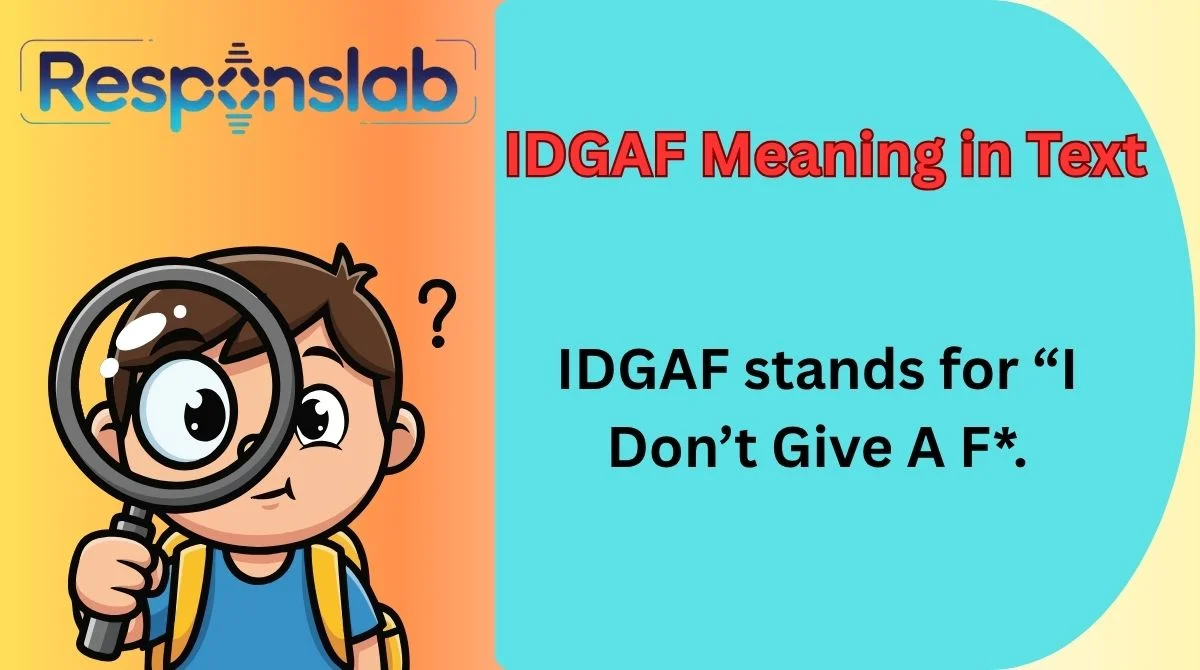
IDGAF stands for “I Don’t Give A F*.”** It is a slang abbreviation used to express strong indifference or lack of concern about something.
At its core, it means the person does not care about a situation, opinion, or outcome. It can sound rude, but sometimes it is used casually among friends.
Primary meaning:
- Complete indifference
- Emotional detachment
- Strong dismissal of an issue
Secondary meaning (lighter tone):
- “I don’t care at all”
- “It doesn’t matter to me”
Example:
- “They’re mad at me? IDGAF 😎”
The tone depends heavily on context, emojis, and relationship between speakers.
Background & Origin of IDGAF
IDGAF originated from English internet slang and became popular in early online chatrooms and texting culture. It grew rapidly during the rise of SMS messaging, where users needed shorter ways to express emotions.
Later, social media platforms like Twitter (now X), Instagram, and TikTok helped it spread globally. It became part of meme culture and youth communication.
The phrase itself comes from spoken English profanity, but shortening it made it more acceptable in digital spaces. Over time, it evolved into a common expression of attitude, rebellion, or emotional independence.
Today, IDGAF is widely understood across many countries, especially among younger internet users.
Usage in Different Contexts
In texting, IDGAF is often used to show confidence or emotional distance.
In casual chats:
- “He left me on read. IDGAF anymore.”
In arguments:
- “Say what you want, I really IDGAF.”
In social media captions:
- “New look. If you don’t like it, IDGAF 😌”
In professional settings, it is rarely appropriate because it contains offensive language. Instead, people use softer alternatives like “I don’t care” or “not concerned.”
Tone matters a lot. With friends, it can be playful. In conflict, it can sound aggressive.
Meanings Across Platforms
On WhatsApp, IDGAF is used in personal chats, often in emotional or dramatic conversations.
On Instagram, it appears in captions, comments, or story replies to show confidence or sarcasm.
On TikTok, it is part of trends, background audio captions, and short expressive videos.
On Snapchat, it is usually quick emotional replies between close friends.
Across platforms, the meaning stays the same, but tone shifts depending on visuals, emojis, and context.
Other Fields or Technical Meanings
Unlike some abbreviations, IDGAF does not have formal meanings in science, medicine, aviation, or technical fields. It is purely internet slang.
However, in psychology-related discussions, it may informally describe emotional detachment or coping behavior, but this is not a technical term.
So in almost all cases:
- IDGAF = internet slang only
Common Misconceptions & Mistakes
Many people misunderstand IDGAF as always being rude or aggressive. While it can be, it is not always meant negatively.
Common mistakes:
- Thinking it always expresses anger
- Assuming it is directed personally
- Believing it is professional language
In reality, tone depends on context. Among friends, it can be humorous. In arguments, it can be dismissive.
Similar Terms & Alternatives
| Slang | Meaning |
|---|---|
| IDC | I don’t care |
| DGAF | Don’t give a f*** |
| Whatever | Indifference |
| Meh | Lack of interest |
| Not bothered | Calm indifference |
These alternatives are often softer and more socially acceptable.
How to Respond to IDGAF in Chat
Your response depends on tone and relationship.
Friendly response:
- “Haha okay 😄”
- “Fair enough!”
Neutral response:
- “Got it.”
- “Understood.”
Defensive situation:
- “Alright, no need to be rude.”
- “Okay, let’s calm down.”
Flirty/casual tone:
- “Ouch 😆 you’re bold!”
Differences From Similar Words
IDGAF is stronger than “IDC” or “whatever.” It carries more emotional weight and sometimes frustration.
- IDC → mild indifference
- IDGAF → strong emotional detachment
- Whatever → passive dismissal
So IDGAF is usually the most intense version of indifference slang.
Relevance in Online Conversations & Dating Apps
On dating apps, IDGAF can signal confidence, independence, or emotional distance.
Example:
- “I travel solo, I IDGAF about plans 😌”
However, it can also create a negative impression if used too aggressively. Some people may see it as rude or emotionally unavailable.
In online conversations, it often acts as a “boundary-setting” phrase, showing that someone is not affected by drama or opinions.
Popularity & Trends Over Time
IDGAF gained popularity during the rise of texting culture in the 2010s and grew further with meme culture.
It saw spikes in usage on social media platforms where short emotional expressions are common.
Today, it remains widely used, especially in:
- Memes
- Short videos
- Casual texting
- Reaction captions
Its popularity stays stable because it expresses a strong, simple emotion quickly.
FAQs
1. What does IDGAF mean in texting?
It means “I don’t give a f***,” showing strong indifference.
2. Is IDGAF rude?
It can be rude depending on tone and context.
3. Is IDGAF used in professional chats?
No, it is not suitable for formal or professional communication.
4. What is a softer version of IDGAF?
“IDC” or “I don’t care” are softer alternatives.
5. Why do people use IDGAF?
To express confidence, emotional distance, or frustration.
Conclusion
IDGAF is a powerful slang term that shows strong indifference or emotional detachment in digital conversations. It is widely used in texting, social media, and meme culture, especially among younger users.
Its meaning can change depending on tone—sometimes funny, sometimes rude, and sometimes empowering. Understanding it helps you read conversations more accurately and avoid misunderstandings.
Even though it is popular, it should be used carefully because it contains strong language. In the right context, it can show confidence, but in the wrong one, it can create conflict.
Knowing slang like IDGAF helps you stay fluent in modern online communication where short expressions carry big meaning.

I am Lucas Hayes, a passionate writer at ResponsLab who enjoys sharing simple and helpful study resources. My goal is to make learning easier by creating clear, useful, and educational content for students.