

Unlike manual hand soap dispensers, an automatic soap dispenser removes the shared touchpoint. There’s no pump for hundreds of hands to press each week, which closes the exact gap where germs usually transfer from person to person.
You’ve probably wiped a ring of dried soap off your benchtop plenty of times without thinking twice. Made Minimal’s hand soap dispensers have helped Australian homes cut that scrubbing out completely.
To help you get a clearer picture, this guide will cover why pump bottles spread germs and how that mess collects around your sink. We’ll also look at how to pick a dispenser that lasts.
Let’s dive into it.
The Hygiene Problem Automatic Soap Dispensers Fix
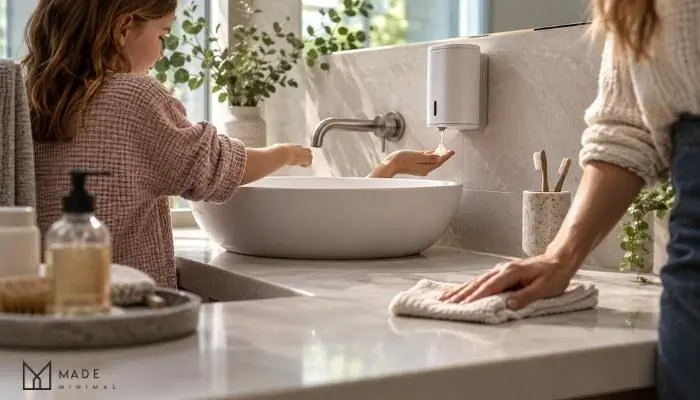
As mentioned earlier, automatic soap dispensers reduce the spread of germs by removing the need to touch a shared pump. Their sensors release soap when you place your hand underneath, so everyone can wash without pressing the same surface.
With manual dispensers, each person touches the pump before washing their hands. Germs can accumulate there, especially in busy kitchens and bathrooms where several people share one bottle. An automatic dispenser avoids that contact, which means fewer chances for germs to pass between users.
However, touchless operation is only one part of keeping a dispenser hygienic. The soap container still needs regular cleaning, especially if you refill it rather than replace it. A contaminated tank can undo the benefit of a touch-free pump.
In fact, a study found more contamination in refillable soap dispensers than in non-refillable ones. Although the researchers didn’t compare manual and automatic models, their findings show why proper refilling and container cleaning are important too.
How Wall-Mounted Soap Dispensers Reduce Mess Around the Sink

Wall-mounted soap dispensers reduce mess by keeping the bottle off your benchtop. Beyond hygiene, this helps prevent sticky soap rings around the basin. With regular pump bottles, excess soap often drips down the sides and leaves residue behind.
A few small habits are behind most of that problem:
- Drips From the Pump: Soap can drip from the nozzle after each use, even when you’ve finished pressing it. Those leftover drops can land on your benchtop and leave small, sticky patches.
- Residue That Hardens: If you leave soap around the bottle’s base, it can eventually dry into a stubborn film. That film traps dirt against other surfaces nearby. At that point, a quick wipe might not be enough, and you’ll need warm water and a little scrubbing.
- Dust That Settles In: Even a clean benchtop can look dirty when dust and hair stick to leftover soap. Left long enough, that buildup can even attract dust mites, especially around a basin the whole household uses.
Overall, a wall-mounted soap dispenser keeps your benchtop cleaner with less effort. You’ll still need occasional wiping, but there’s less mess to deal with, even in high-traffic spots like a busy family kitchen.
The Kitchen Tap Needs a Soap Dispenser as Much as the Bathroom Does
A kitchen basin needs a soap dispenser because cooking often leaves germs on your hands. For example, when you handle raw meat or other raw foods, bacteria can spread to taps, chopping boards, and utensils through direct contact. Your phone or tea towel can pick up those germs too, especially if you reach for them before washing.
The risk grows when children are around. Kids may touch kitchen surfaces or grab snacks while you’re preparing meals, which can expose them to harmful bacteria. For sensitive kids, that contact can even raise the chance of allergic reactions.
That’s why Food Standards Australia New Zealand advises washing your hands after handling raw meat and before touching other foods. It helps prevent cross-contamination, which can lead to food poisoning.
With a soap dispenser beside the kitchen sink, you can wash your hands whenever you switch tasks in food preparation areas. It’s one of the simplest food handling habits to build, and it only takes 20 seconds with soap and running water to do it properly.
Also, don’t forget to clean your fingertips, between your fingers, and under your nails, where germs can remain. With soap close at hand, it’s easier to wash properly, even when you’re busy preparing meals.
What to Look for When Buying a Soap Dispenser
Good liquid soap dispensers handle daily use, refill easily, and release a steady amount of soap each time. After all, you don’t want to deal with spills, weak pumps, or frequent replacements.
Before buying one, check these three features:
- An Easy-to-Refill Tank: A wide opening lets you pour soap directly into the tank without spilling it around the edges. Narrow openings can make refills messy, especially when you’re using thick liquid soap. Also, check if you can remove the tank easily for cleaning.
- Stainless Steel Over Plastic: A busy sink is hard on plastic. One accidental knock and it’s cracked for good. Stainless steel takes the same hit without a mark, so look for a rust-resistant finish that wipes clean after use.
- Consistent Pump Pressure: Had a dispenser give you barely a drop, then flood your palm the next use? That inconsistency wastes soap over time. A good one keeps the amount steady, and for automatic models, check that the sensor responds reliably and lets you adjust it.
From our hands-on experience, stainless steel resists cracking and denting far better than plastic, which means fewer replacements and less waste over time. That makes it an eco-friendly choice as well as a practical one. Get the right soap dispenser from the start, and you’ll likely get years out of it.
A Dispenser That Earns Its Place on the Bench
Most people don’t think about hygiene at home until it turns into a hassle, and by then, the mess is already everywhere. Thankfully, automatic soap dispensers offer a simple fix for kitchens and bathrooms across Australia, helping keep your home clean and your family healthy.
So, to recap, this blog covered how touchless dispensers improve hygiene, reduce sink mess, and support kitchen handwashing. We’ve also shared what to look for when buying one. Together, these points make it easier to pick a dispenser that fits your home.
For a practical option, Made Minimal offers a stainless steel soap dispenser that suits everyday use in Australian homes. Our range focuses on clean designs and easy upkeep for busy kitchens and bathrooms. Explore our range to find your ideal dispenser.