In today’s fast-moving digital world, short forms and abbreviations are everywhere. People often type quick slang instead of full sentences to save time. One such confusing term many users search for is “llyt meaning in text.”
This abbreviation appears in chats, social media comments, and even dating apps, leaving many people unsure about what it actually means. Because it is not a standard dictionary word, its interpretation depends heavily on context.
Most of the time, users try to decode whether it is a typo, slang, or emotional expression. That’s why searches for “llyt meaning” keep increasing online.
In this article, we’ll break down its meaning, usage, origin, and how you should respond when someone sends it to you.
Meaning & Definition of LLyT in Text
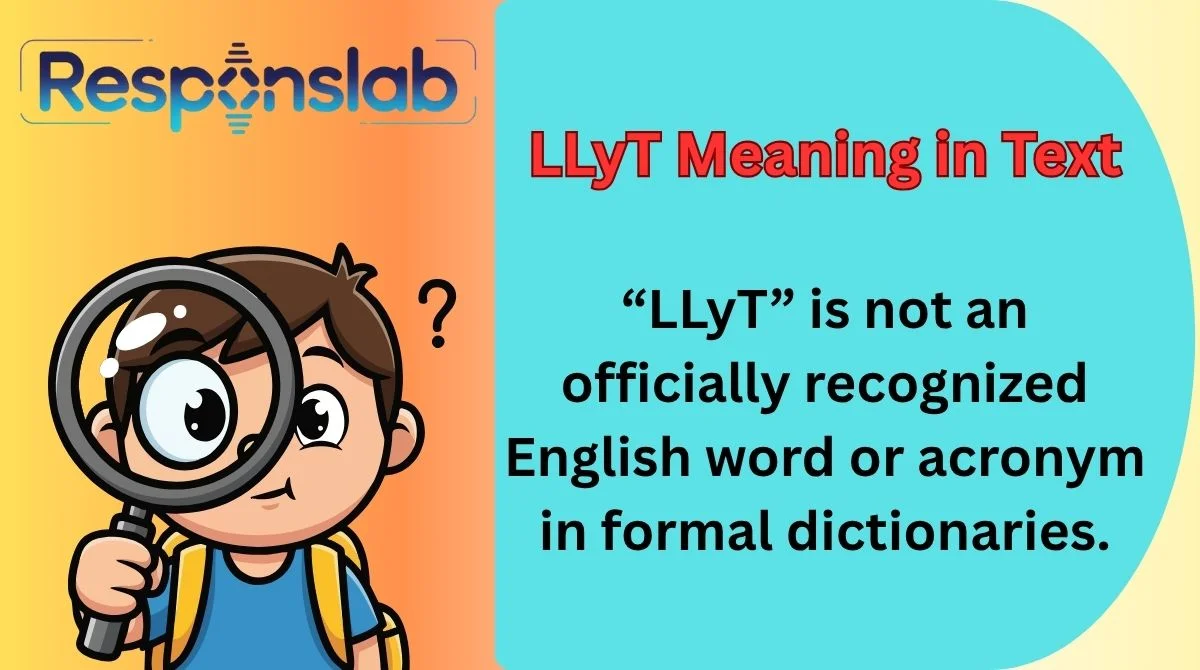
“LLyT” is not an officially recognized English word or acronym in formal dictionaries. In most online conversations, it is considered a variation or typo of “ILYT,” which stands for “I Love You Too.”
So, the primary meaning:
- ILYT → I Love You Too
- LLyT → Common misspelling or stylized version of the same phrase
In some rare cases, users also interpret it creatively depending on context, but 90% of the time it relates to an emotional response of affection.
Secondary meaning (context-based):
- A casual affectionate reply in romantic chats
- A playful or emotional shorthand in texting culture
Because texting slang evolves quickly, variations like “llyt” often appear without formal definition.
Background & Origin
The origin of “llyt” is linked to internet texting culture, where speed and convenience matter more than grammar. People started shortening phrases like “I love you too” into acronyms such as “ILYT.”
Over time, typing errors, autocorrect mistakes, and fast keyboard use led to variations like “llyt.”
This kind of abbreviation became more common with:
- Early SMS texting (character limits)
- Social media messaging (Facebook, Instagram DMs)
- Mobile-first communication culture
Unlike formal acronyms, “llyt” has no official origin—it is part of evolving internet slang.
Usage in Different Contexts
In everyday chats, “llyt” is mostly used in emotional or casual conversations.
Common usage examples:
- Romantic replies between couples
- Friendly affectionate responses
- Playful texting among close friends
Examples:
- “I miss you ❤️”
“llyt 😊” - “You’re the best!”
“llyt haha”
It is rarely used in professional communication because it carries emotional and informal meaning.
Meanings Across Platforms
Different platforms shape how abbreviations like “llyt” are interpreted:
- WhatsApp: Mostly used in personal chats between couples or friends
- Instagram: Seen in comments, DMs, or story replies
- TikTok: Appears in comment sections as playful emotional reactions
- Snapchat: Common in fast, casual conversations with close contacts
Across all platforms, the meaning remains consistent—an affectionate shorthand, usually linked to “I love you too.”
Other Fields or Technical Meanings
Unlike some abbreviations, “llyt” has no established meaning in:
- Physics
- Medical terminology
- Aviation or aircraft systems
- Engineering or technical fields
It is purely a digital slang expression used in informal texting culture.
Common Misconceptions & Mistakes
Many people misunderstand “llyt,” leading to confusion:
- Thinking it is a technical abbreviation ❌
- Assuming it has multiple official meanings ❌
- Believing it is a new internet trend acronym with complex meaning ❌
The biggest mistake is overanalyzing it—it is usually just a casual emotional response or typo of “ILYT.”
Similar Terms & Alternatives
| Abbreviation | Meaning |
|---|---|
| ILY | I Love You |
| ILYT | I Love You Too |
| LY | Love You |
| LUV U | Love You (casual) |
| XOXO | Hugs and Kisses |
These terms are often used interchangeably in texting and social media.
How to Respond to LLyT in Chat
If someone sends you “llyt,” your reply depends on context:
- Romantic response: “Aww ❤️ I love you more!”
- Friendly reply: “Haha thanks 😊”
- Playful response: “Right back at you 😄”
- Casual acknowledgment: “Same here 👍”
Chat examples:
- “llyt ❤️” → “You just made my day 😊”
- “llyt haha” → “Haha you’re cute 😄”
- “llyt 😘” → “Always ❤️”
Differences From Similar Words
- ILYT vs LLyT: ILYT is standard; LLyT is a variant or typo
- ILY vs LLyT: ILY is one-way love; LLyT is response-based
- LY vs LLyT: LY is shorter and simpler, LLyT is more expressive
Basically, LLyT is not new—it’s just a variation of existing texting slang.
Relevance in Online Conversations & Dating Apps
On dating apps, abbreviations like “llyt” are common because users want quick emotional communication.
It helps:
- Express affection quickly
- Maintain casual tone
- Keep conversations light and playful
However, not everyone understands it, so miscommunication can happen if the other person is not familiar with texting slang.
Popularity & Trends Over Time
The usage of abbreviations like “llyt” increased with:
- Rise of smartphones
- Growth of social media messaging
- Gen Z texting culture
Although “llyt” itself is not widely tracked as a keyword, related terms like “ILY” and “ILYT” consistently trend in online communication searches.
Its popularity is stable in casual digital conversations rather than formal trend spikes.
FAQs
1. What does LLyT mean in text messages?
It usually means “I Love You Too,” often as a variation of ILYT.
2. Is LLyT a correct spelling?
No, it is typically a typo or informal version of ILYT.
3. Is LLyT romantic?
Yes, it is mostly used in romantic or affectionate chats.
4. Where is LLyT commonly used?
On WhatsApp, Instagram, Snapchat, and TikTok messages.
5. Can LLyT have different meanings?
Rarely. Most of the time, it refers to “I love you too.”
6. Is LLyT formal or informal?
It is strictly informal and used in casual texting only.
Conclusion
“LLyT meaning in text” mainly points to a casual, emotional expression used in online chatting. Most commonly, it is understood as a variation or typo of “ILYT,” meaning “I Love You Too.”
Its usage is popular in social media and private messaging, especially among friends and couples who prefer quick emotional replies.
Because it is not a formal abbreviation, its meaning depends heavily on context and relationship between users.
While it may look confusing at first, it is actually a simple and friendly expression of affection. In digital communication, small variations like this continue to evolve, making texting more expressive and personal.

I am Lucas Hayes, a passionate writer at ResponsLab who enjoys sharing simple and helpful study resources. My goal is to make learning easier by creating clear, useful, and educational content for students.