
A heating and cooling system can run normally while the rooms it serves remain uncomfortable. In some homes, the trouble lies in concealed ducts rather than the furnace or air conditioner. Loose joints, crushed flexible ducts and poorly insulated runs can waste conditioned air or disrupt distribution. Because much of the duct system sits behind finishes, a good diagnosis combines measured performance with careful investigation.
Recognize Clues Without Jumping to Conclusions
Possible warning signs include one room that never reaches the desired temperature, unusual noise at registers, excessive dust near leaks or longer-than-expected equipment operation. Yet these symptoms can also result from insulation problems, restricted filters or an undersized system.
Technicians therefore begin by asking when the problem occurs and whether it started after remodeling, attic work or a system replacement. They compare rooms and operating conditions rather than treating one symptom as proof of duct damage.
Inspect What Can Be Seen First
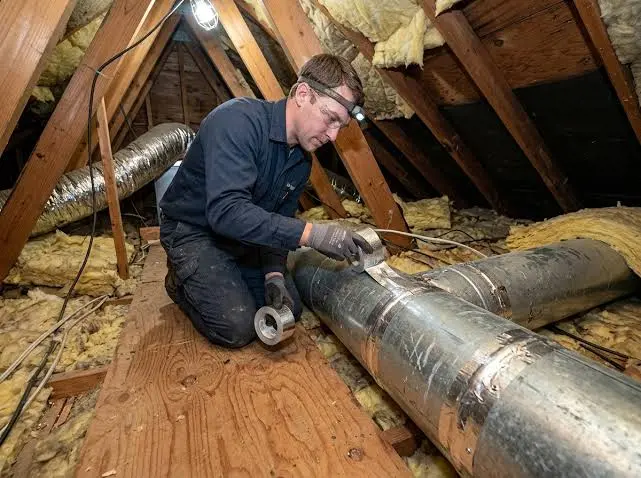
Accessible attic, basement and crawlspace ducts may reveal disconnected sections, crushed runs, torn insulation or loose supports. A technician can also inspect registers, accessible returns and visible connections for improper assembly.
Flexible ducts need suitable support and gentle bends; tight bends can restrict airflow even when the material has no visible holes. Similarly, poorly sealed return connections can draw unconditioned air from surrounding spaces.
Measure Airflow and Pressure
Visual inspection does not show how much air actually reaches a room. Depending on the system, a professional may use airflow instruments, static-pressure measurements and temperature readings to evaluate distribution performance.
These measurements help separate problems in the duct network from issues in the blower, coil or filter. For example, high static pressure may point toward a restriction, whereas poor delivery to a particular branch may suggest a disconnected or poorly balanced run.
Use Leakage Testing Where Appropriate
Duct leakage tests can quantify unwanted air movement in a system under controlled test conditions. Technicians may isolate components and use calibrated equipment to investigate leakage. They then combine results with visual evidence and building conditions to locate likely problem areas.
The Department of Energy’s duct-sealing guidance describes why escaping supply air and leaking returns can affect comfort, energy use and air quality. It also explains the value of appropriate sealing products rather than ordinary cloth duct tape.
Repair the Cause, Then Retest
Solutions depend on the defect. A disconnected joint may require proper reconnection and sealing; a crushed flexible run may need replacement or rerouting. Damaged insulation should be repaired where appropriate, particularly in unconditioned spaces.
Avoid covering a weak connection with a cosmetic layer of tape. The repair should satisfy applicable installation standards and preserve airflow. Afterward, technicians should retest performance to confirm that the original problem improved.
Plan for Better Duct Access
When homeowners renovate, they can ask contractors to preserve practical access to key duct connections and dampers. They should also document concealed routing before closing walls or ceilings. Good records can reduce destructive investigation during future maintenance.
Conclusion
Hidden duct trouble is best handled as a measurement problem, not a guessing game. By combining symptom history, pressure and airflow testing, visual evidence and post-repair checks, professionals can restore performance without replacing sound equipment unnecessarily.
Also Read-What Does GW Mean in Text? Meaning, Uses, Examples & More(2026)