“Awe meaning in text” is a popular search phrase because people often see the word “awe” in chats and social media but feel unsure about what it really means.
In digital conversations, small words can carry big emotional weight, and “awe” is one of them. It can express admiration, surprise, cuteness, or emotional response depending on the situation.
Many users also confuse it with “aww,” which is commonly used to show affection or sympathy. Because texting language evolves quickly, understanding such terms helps avoid miscommunication.
Whether you are chatting on WhatsApp, scrolling TikTok comments, or replying on Instagram, knowing what “awe” means makes your responses more natural and confident.
In this article, we will break down the meaning of “awe in text,” its origins, usage across platforms, and common mistakes. You’ll also learn how to reply correctly and how it differs from similar expressions used online today.
Meaning & Definition
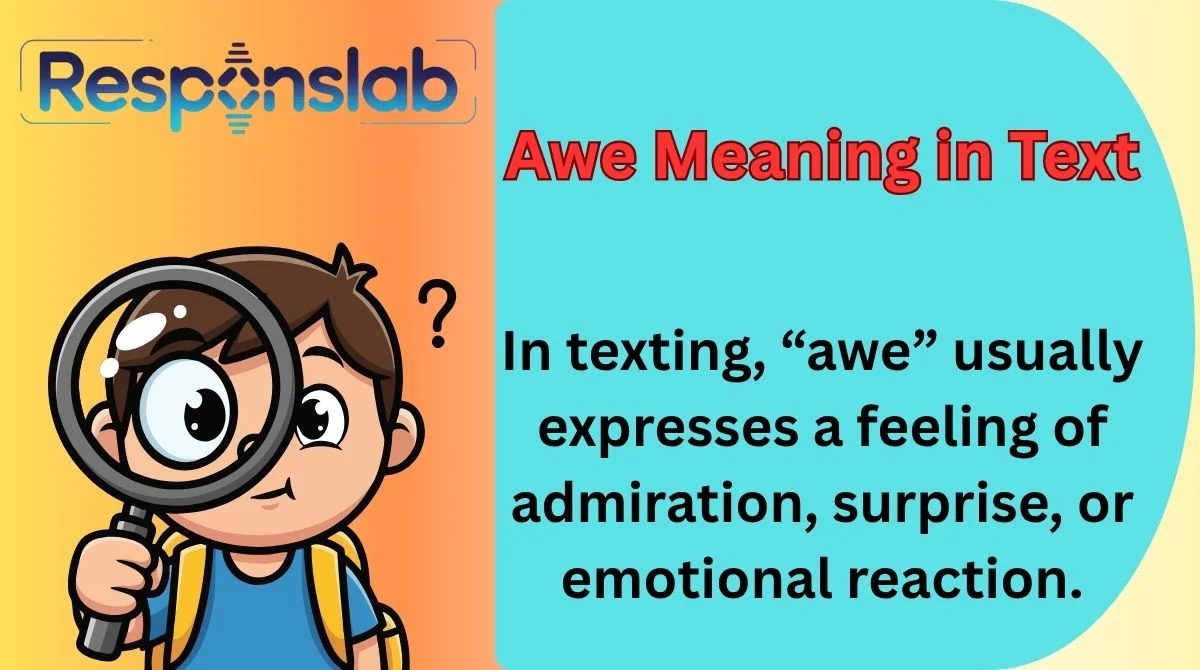
In texting, “awe” usually expresses a feeling of admiration, surprise, or emotional reaction. It often shows that someone is impressed or touched by something.
- Primary meaning: A reaction to something amazing or emotionally strong
- Secondary meaning: A soft emotional response similar to “wow” or “that’s sweet”
For example:
- “Awe, that’s so cute 😊” → shows affection or emotional reaction
- “Awe, really?” → shows surprise or mild disbelief
It is important to note that “awe” is sometimes confused with “aww,” which is more emotional and affectionate. “Awe” leans slightly more toward amazement or admiration, while “aww” leans toward sympathy or cuteness.
Background & Origin
The word “awe” originally comes from Old English “ege” and later “awe,” meaning fear, respect, or wonder. Historically, it described a deep emotional reaction to something powerful or overwhelming.
Over time, the meaning shifted. Today, in modern English and internet slang, it is more associated with wonder, admiration, or emotional appreciation rather than fear.
In texting culture, users simplified it further, turning it into a quick reaction word. Instead of writing full sentences like “That’s amazing!” people started using short emotional expressions like “awe” or “aww.”
Usage in Different Contexts
In online conversations, “awe” is used in several ways depending on tone.
- Emotional reaction: “Awe, I love this!”
- Surprise: “Awe, I didn’t know that!”
- Appreciation: “Awe, thank you so much 😊”
- Casual response: “Awe okay”
In professional communication, it is rarely used because it is informal. Instead, people prefer words like “great,” “excellent,” or “noted.”
On social media, “awe” is often used in comments to react to cute, emotional, or impressive posts.
Meanings Across Platforms
Different platforms influence how “awe” is used:
WhatsApp:
Used in personal chats to show emotion or reaction quickly.
Instagram:
Common in comments under cute photos, reels, or emotional posts.
TikTok:
Used in reaction comments like “awe that’s so wholesome 😭”
Snapchat:
Used in short conversations or reactions to snaps.
Across all platforms, it remains an informal emotional expression rather than a formal word.
Other Fields & Technical Meanings
Outside texting, “awe” does not usually function as an acronym in major technical fields. However:
- Psychology: Refers to a deep emotional response to something vast or powerful
- Nature studies: Used to describe feelings when observing natural beauty
- Literature: Often used to describe emotional wonder or reverence
It is not commonly used as a technical abbreviation in physics, medicine, or aviation.
Common Misconceptions & Mistakes
Many users misunderstand “awe” in text:
- Thinking it always means “cute” (it can also mean surprise)
- Confusing it with “aww” (which is more emotional and affectionate)
- Using it in formal emails (not appropriate)
- Assuming it is sarcasm (depends on context)
Understanding tone is important when interpreting it in chats.
Similar Terms & Alternatives
| Word | Meaning | Usage |
|---|---|---|
| Aww | Cute or emotional sympathy | “Aww, that’s adorable” |
| Wow | Surprise or amazement | “Wow, that’s great!” |
| OMG | Shock or excitement | “OMG, really?” |
| Nice | Approval | “Nice work!” |
Each term overlaps slightly but carries different emotional intensity.
How to Respond to It
When someone says “awe” in chat, your response depends on context:
- Friendly reply: “Haha thanks 😊”
- Emotional reply: “Glad you liked it!”
- Casual reply: “Yesss 😄”
- Playful reply: “Awe right back at you 😆”
Examples:
- Person A: “Awe, that’s so sweet!”
Person B: “Haha thanks 😊” - Person A: “Awe really?”
Person B: “Yes, I mean it!”
Differences From Similar Words
“Awe” is often mixed up with “aww,” but they are not the same.
- Awe → admiration, surprise, amazement
- Aww → cuteness, sympathy, emotional softness
Example:
- “Awe, that’s impressive!” (wow reaction)
- “Aww, poor you 🥺” (empathy reaction)
Understanding this difference helps avoid confusion in texting.
Relevance in Online Conversations & Dating Apps
In dating apps and casual chats, “awe” is often used as a soft emotional response. It helps make conversations feel warmer and more human.
Examples:
- “Awe, you remembered that 😊”
- “Awe that’s really sweet of you”
It helps express interest without sounding too intense. However, overusing it can make messages feel repetitive or unnatural.
Popularity & Trends Over Time
The usage of “awe” in texting increased with the rise of social media platforms like Instagram, TikTok, and Snapchat.
- 2010–2015: Rare in texting, mostly formal usage
- 2016–2020: Became common in social media comments
- 2021–present: Widely used in casual online conversations
Search interest often spikes when people encounter it in viral posts or memes.
FAQs
1. What does “awe” mean in text?
It usually means admiration, surprise, or emotional reaction.
2. Is “awe” the same as “aww”?
No, “aww” shows sympathy or cuteness, while “awe” shows admiration or surprise.
3. Is “awe” formal or informal?
It is informal and mostly used in casual chats.
4. Can I use “awe” in professional emails?
No, it is not suitable for formal communication.
5. Why do people use “awe” in chats?
Because it is short, expressive, and emotionally engaging.
Conclusion
Understanding “awe meaning in text” helps you communicate better in modern digital conversations. It is a simple yet expressive word used to show admiration, surprise, or emotional reaction.
While often confused with “aww,” it carries a slightly different tone that focuses more on amazement than affection.
In today’s fast-paced messaging culture, short expressions like “awe” make conversations more natural and human.
Whether you are chatting with friends, commenting on social media, or reacting to content, knowing its correct usage improves your communication style.
So next time you see “awe” in a message, you’ll instantly understand the emotion behind it and respond with confidence 😊.

I am Lucas Hayes, a passionate writer at ResponsLab who enjoys sharing simple and helpful study resources. My goal is to make learning easier by creating clear, useful, and educational content for students.